
Everyone talks about growth rates. Everyone talks about weight gain.
But the real money in cattle has always been in fertility.
The longer you are in the cattle industry, the more you realise that fertility is the trait that quietly drives almost everything else.
Not just because fertile cows produce more calves, but because fertility influences cashflow, drought resilience, labour requirements, replacement rates and long-term herd profitability. A cow that consistently breeds back year after year becomes an asset that compounds value over time.
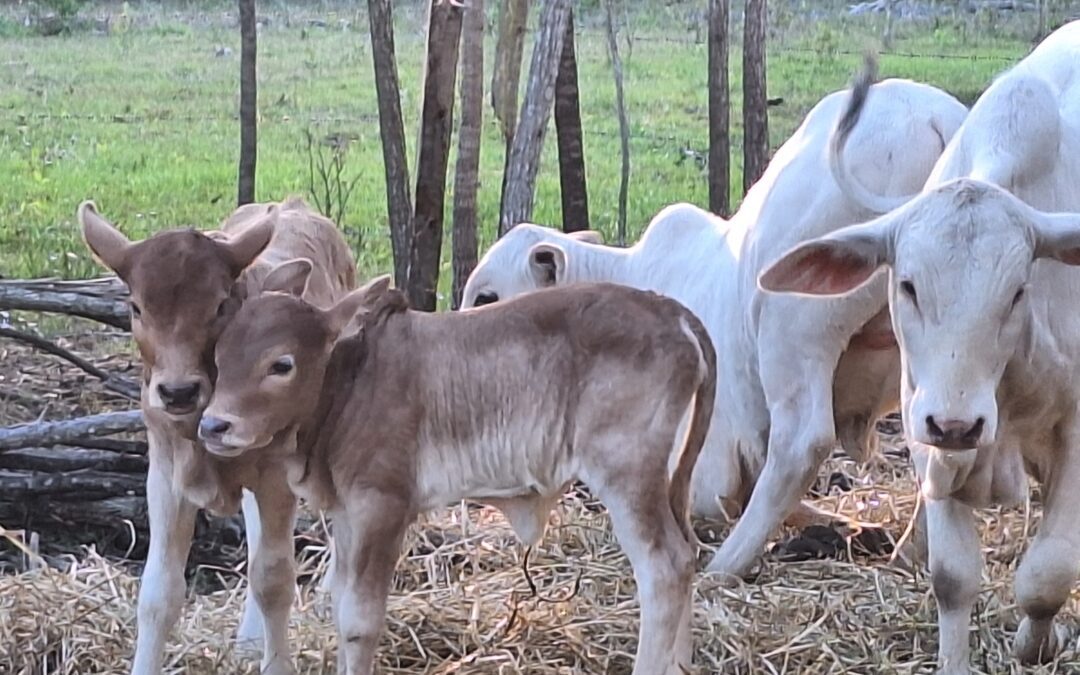
That’s one of the reasons the Boran has attracted so much attention globally, not only as a pure breed, but as a crossbreeding tool to improve fertility and functionality in other cattle breeds.
The Boran was shaped under genuine environmental pressure on the plains of Africa. Heat, parasites, seasonal feed shortages and long walking distances were not occasional challenges for the breed — they were normal life. In those environments, cattle that failed to reproduce simply did not remain in the system. Over generations, that pressure helped build a breed renowned for fertility, maternal ability and reproductive efficiency under stress.
Researchers studying Boran cattle repeatedly highlight their ability to “survive, produce and reproduce” under difficult tropical conditions. That last word is the important one. Plenty of cattle can survive tough seasons. The profitable cattle are the ones that continue producing calves while doing it.
One of the fascinating things about the Boran is how quickly many females return to cycling after calving compared to other adapted cattle in similar systems. In many tropical beef systems, cows can take 150–200 days or more to conceive again after calving when they lose too much condition. Studies involving Boran and Boran-cross cattle have reported significantly shorter “days open”, with some Boran-cross females averaging around 145 days. Every extra day a cow remains empty costs money, so reducing that interval has a huge impact on lifetime profitability.
What makes the Boran especially interesting is how effectively these fertility traits flow into crossbred cattle.
Crossbreeding studies involving Boran cattle and European breeds like Friesians consistently demonstrated strong hybrid vigour for reproductive traits. Researchers recorded fertility-related improvements of between 10% and 21% in crossbred cattle. That is an enormous commercial advantage because producers are not simply getting hybrid vigour in growth, they are often getting females that conceive earlier, calve more regularly and remain productive longer.
And this is not limited to dairy genetics.
Across Africa and increasingly in tropical beef systems around the world, Boran genetics have also been used successfully over Angus cattle to improve fertility, adaptability and cow efficiency in hotter environments. Angus cattle bring carcass quality, marbling and market acceptance, while the Boran contributes heat tolerance, parasite resistance, maternal strength and reproductive efficiency.
Many breeders working with Boran-Angus composites report females that maintain body condition better through tough seasons and return to pregnancy faster after calving than straight British bred cattle under the same environmental pressure. That becomes incredibly valuable in northern and subtropical production systems where fertility often drops during prolonged heat or feed stress.
It is one of the reasons stabilised composites like the Angus-Boran are attracting increasing commercial attention. Producers are chasing cattle that can still deliver premium beef outcomes without sacrificing fertility and adaptability.
The Boran also developed a reputation for calving ease, which many producers underestimate financially. Boran calves are generally born lighter, reducing calving difficulty and labour requirements, while still maintaining strong survivability and maternal performance. When those traits are combined with improved fertility in crossbred females, the commercial benefits start compounding very quickly.
Then there is longevity.
Boran cattle are well known for remaining fertile and productive later in life than many modern cattle systems expect. Fertile cows working productively well into their teens are not uncommon in Boran systems. A cow that lasts several extra years changes the economics of an entire breeding program because she spends more of her life generating income rather than being replaced.
The more you study truly profitable cattle systems, the more you realise they are usually built around one thing:
fertile females.
Not fashionable females. Not extreme females. But fertile females.
And that is why the Boran continues drawing attention from serious commercial cattle producers around the world.
Because fertility never goes out of style.